If you have spent any time researching skincare, you have probably come across two things everywhere: Niacinamide and Korean sunscreen. Separately, both are powerful. Together, they form one of the most effective skincare combinations for Indian skin — especially if you deal with pigmentation, oily skin, large pores, or sun damage.
India’s climate is harsh on skin. High UV index, humidity, heat, and pollution create the perfect storm for dull skin, dark spots, and early ageing. Most Indian skincare routines address these concerns separately — a brightening serum here, a sunscreen there. But what if one combination could tackle almost all of it at once? This article explains exactly why Niacinamide paired with a Korean sunscreen is a game-changer for Indian skin — and how to use them correctly to get the best results.
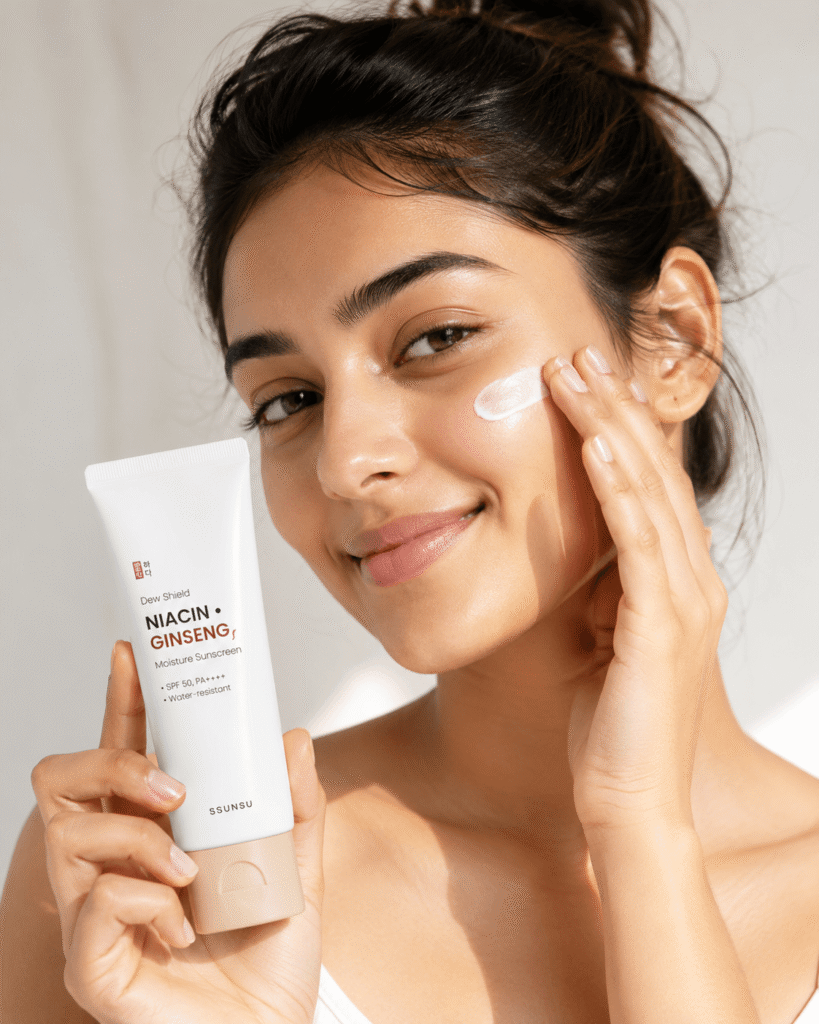
What Is Niacinamide and Why Does Indian Skin Love It?
Niacinamide is a form of Vitamin B3 — a water-soluble vitamin that works directly with the natural substances in your skin. It has become one of the most researched and celebrated skincare ingredients in the world, and for good reason.
Here is what Niacinamide does for the skin:
- Reduces hyperpigmentation — fades dark spots, sun spots, and post-acne marks by interfering with the transfer of melanin to skin cells
- Controls sebum production — regulates oil glands, making it ideal for oily and combination skin
- Minimises pore appearance — keeps pores clear and visibly smaller over time
- Strengthens the skin barrier — boosts ceramide production, which keeps the skin hydrated and protected
- Reduces inflammation — calms redness, irritation, and active breakouts
- Evens skin tone — gives the skin a more uniform, bright appearance with consistent use
For Indian skin specifically, Niacinamide addresses the three most common concerns — pigmentation, oiliness, and uneven skin tone — all at once. It is also gentle enough for sensitive skin and safe for daily use.
Recommended concentration: 5–10% Niacinamide is the sweet spot. Below 5% shows minimal results. Above 10% can sometimes cause mild flushing in sensitive individuals.
What Makes Korean Sunscreen Different?
Korean sunscreen is not just regular SPF in a prettier bottle. Korean skincare brands approach sun protection with a completely different philosophy — and the formulations show it.
Key differences between Korean and regular sunscreens:
- Lightweight textures — Korean sunscreens are formulated to feel like skincare, not a thick, greasy layer. Many have a gel, serum, or water-drop texture that absorbs instantly
- Skin-nourishing ingredients — Korean formulas routinely include actives like Centella Asiatica, fermented extracts, hyaluronic acid, and antioxidants alongside the SPF filter
- Elegant finish — Korean sunscreens are designed for everyday wear, leaving a natural, non-shiny finish suitable under makeup
- Broad-spectrum protection — Korean formulas follow strict PA+++ and PA++++ ratings for UVA protection, which are often higher than equivalent Western products
- No white cast — advanced formulation techniques mean Korean sunscreens blend into all skin tones, including medium and deep Indian skin tones, without leaving a grey or white residue
SSUNSU, a Korean beauty brand now available in India, brings authentic Korean sun protection technology formulated specifically keeping Indian skin and climate in mind. Their sunscreen is enriched with fermented Korean actives that nourish the skin barrier while providing SPF 50 PA++++ broad-spectrum protection — without the heavy texture that most Indian consumers dislike about traditional sunscreens.
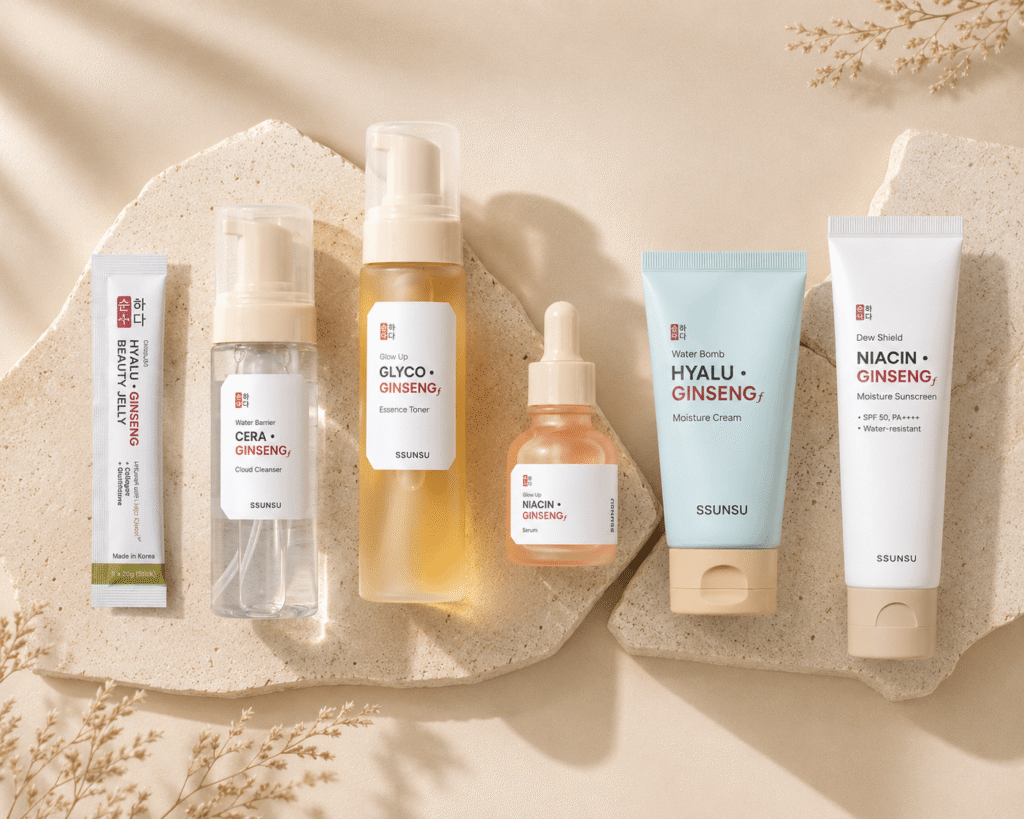
Why This Combination Works So Well Together
Niacinamide and Korean sunscreen work together in a way that amplifies the benefit of both.
Here is the science behind it:
1. Niacinamide prepares the skin — Korean sunscreen protects it
Niacinamide strengthens the skin barrier and reduces inflammation. A stronger barrier means the skin absorbs and holds onto the protective benefits of sunscreen more effectively. When the skin barrier is compromised, sunscreen sits unevenly and wears off faster.
2. Niacinamide fights existing pigmentation — sunscreen prevents new pigmentation
This is the most powerful aspect of this combination. Niacinamide fades existing dark spots and post-acne marks. But without sunscreen, UV exposure will trigger new pigmentation daily — undoing all the work of your Niacinamide. Together, they attack pigmentation from both ends: fading what exists, and preventing what is coming.
3. Both are oil-control powerhouses
Niacinamide regulates sebum. Korean sunscreens are lightweight and non-comedogenic. For oily Indian skin in a humid climate, this combination feels comfortable all day without the greasy, pore-clogging feeling that makes many people skip sunscreen altogether.
4. Anti-ageing benefit doubles
Niacinamide boosts collagen production. Korean sunscreens often contain antioxidants and fermented extracts. Together, they provide both active repair and UV-damage prevention — a complete anti-ageing system in two steps.
How to Use Niacinamide and Korean Sunscreen Together
Many people wonder about the correct order of application. Here is the simple routine:
Morning Routine:
- Cleanser — wash your face with a gentle, non-stripping cleanser
- Toner — prep the skin and balance pH
- Niacinamide Serum — apply 2–3 drops, press gently into skin, wait 60 seconds
- Moisturiser — seal in the serum (lightweight gel moisturiser for oily skin)
- Korean Sunscreen SPF 50 PA++++ — apply generously as the last skincare step, before makeup
Important tips:
- Apply sunscreen every morning, even indoors — UV rays penetrate glass
- Reapply every 2 hours if you are spending time outdoors
- Use at least ¼ teaspoon of sunscreen for the face and neck
- Do not mix Niacinamide serum and sunscreen together in your palm — apply them as separate steps for full efficacy
Who Should Use This Combination?
This combination works for almost every Indian skin type:
- Oily skin — both ingredients control oil and shine
- Acne-prone skin — Niacinamide reduces breakouts, Korean sunscreen is non-comedogenic
- Hyperpigmented skin — the most effective combination for stubborn dark spots
- Dull skin — Niacinamide brightens, sunscreen maintains the glow
- Ageing skin — together they are a complete anti-ageing duo
- Sensitive skin — both are well-tolerated; choose fragrance-free formulas
The only skin type that might need to be careful is very dry skin — in this case, add a richer moisturiser between the serum and sunscreen.
Final Thoughts
The Indian skincare market is flooded with products that promise results but rarely deliver. The Niacinamide and Korean sunscreen combination cuts through the noise with science-backed, proven results.
Niacinamide fades, brightens, and controls oil. A good Korean sunscreen protects, nourishes, and prevents future damage. Together, they address the root causes of the most common Indian skin concerns — pigmentation, oiliness, dullness, and premature ageing.
Start with these two steps in your morning routine and stay consistent for 8–12 weeks. The results will speak for themselves.
Sources:
- Journal of Clinical and Aesthetic Dermatology — Niacinamide in Skincare
- International Journal of Dermatology — UVA/UVB Protection and Indian Skin
- Korean Dermatological Association — Sunscreen Formulation Standards
Author Bio: Vijeta Khurana is a PR and SEO professional specialising in beauty and wellness. She works with SSUNSU (ssunsu.in), a Korean Beauty & Wellness brand that brings authentic K-beauty formulations — including fermented actives and Korean sunscreens — to Indian consumers.