Hydration is one of the most commonly misunderstood concepts in skincare, largely because it’s often confused with oiliness. Skincare advice tends to divide skin into “dry” and “oily,” implying that hydration is only relevant if your skin doesn’t produce enough oil. From a dermatological and biological perspective, this distinction doesn’t hold up.
Hydration refers to the amount of water within the skin, while oil (sebum) is produced separately to lubricate the surface. This is why oily or acne-prone skin can still feel tight, irritated, or uncomfortable. These symptoms are often signs of dehydration rather than
excess oil.
Understanding this distinction is essential when choosing the best hydrating serum in India, particularly in a climate that places constant stress on the skin barrier.
Why Dehydration Is So Common in Indian Skin?
Indian skin is exposed to a unique combination of stressors:
- High pollution levels
- Frequent cleansing
- Long hours of air-conditioning
- Seasonal humidity shifts
- Overuse of actives like exfoliating acids
Over time, these factors impair the skin barrier, allowing water to escape more easily. When this happens, the skin often compensates by producing more oil, creating the false impression that hydration isn’t needed.
This cycle is especially common in acne-prone individuals who aggressively strip oil while unknowingly worsening dehydration.
What Dermatologists Mean by “Best Hydrating Serum”?
From a dermatological standpoint, the “best” hydrating serum is not defined by price, popularity, or marketing claims. Instead, it is evaluated based on how effectively it increases water content in the skin without disrupting barrier function or triggering irritation.
Key criteria include :
- Proven humectants that bind water
- Barrier-compatible formulations
- Suitability for long-term, daily use
- Tolerance across different skin types
- Performance in hot, humid climates
This approach shifts the focus from product hype to formulation science.
Ingredients That Actually Hydrate Skin (And Why They
Matter)
Hyaluronic Acid: More Than a Buzzword
Hyaluronic acid is a naturally occurring molecule in the skin that binds water. Its effectiveness depends heavily on how it’s formulated.
- Low molecular weight forms help improve hydration deeper within the skin
- High molecular weight forms hydrate the surface and improve skin feel
When used correctly, hyaluronic acid supports flexibility and reduces the tight sensation commonly associated with dehydration.
Glycerin: The Gold Standard Humectant
Despite being less glamorous than newer ingredients, glycerin remains one of the most reliable hydrating agents in dermatology.
- It improves water retention over time
- Strengthens the skin barrier
- Performs well in humid environments like India
Many formulations underestimate glycerin, despite strong clinical backing.
Panthenol and Ceramides: Supporting the Barrier
Hydration is short-lived if the barrier is compromised.
- Panthenol (Vitamin B5) helps calm irritation and reduce water loss
- Ceramides restore the lipid structure of the barrier, preventing recurring dehydration
Together, these ingredients help hydration last rather than evaporate within hours.
Delivery Systems and Hydration Efficiency
Some hydrating serums incorporate delivery systems such as liposomes or plant-derivedvexosomes. These systems are designed to support ingredient stability and skin compatibility, allowing hydrating actives to function effectively without overwhelming sensitive skin.
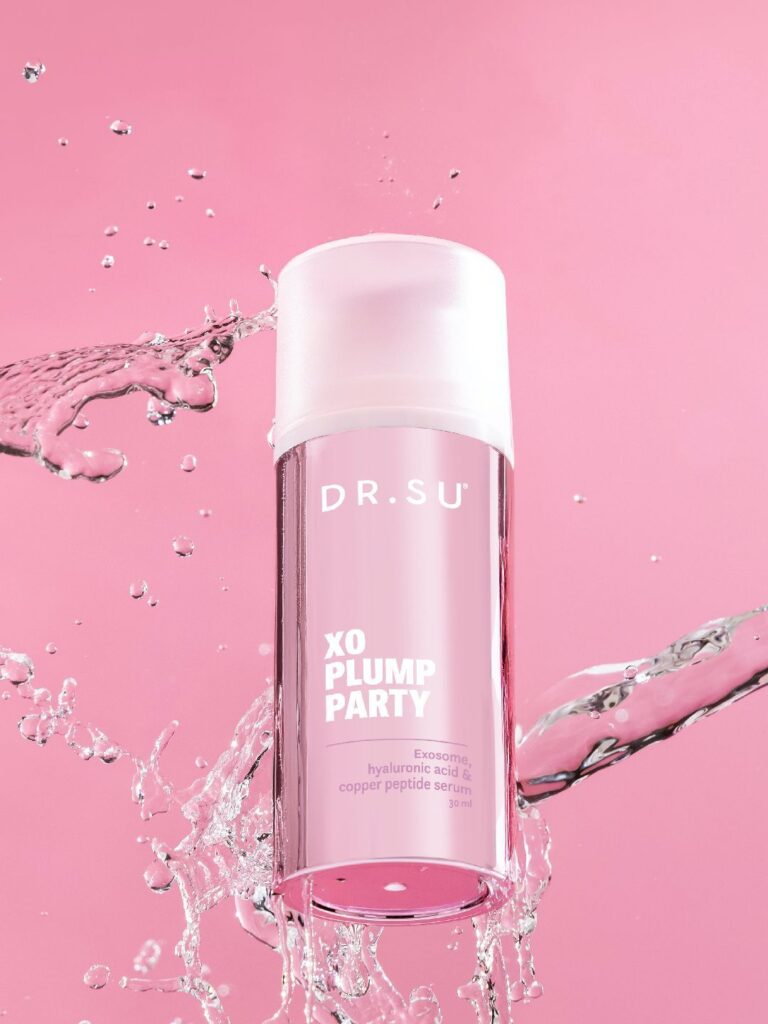
A formulation that follows this approach is Dr. Su’s Exosome Plump Party Serum, which combines humectants like hyaluronic acid with plant-derived exosomes and barrier-supportive ingredients to focus on sustained hydration.
Ingredients Commonly Mistaken for Hydration
Some products marketed as hydrating rely on ingredients that can worsen dehydration with repeated use:
- High concentrations of alcohol
- Strong fragrance
- Essential oils for sensitive skin
- Daily-use exfoliating acids
These ingredients may feel refreshing initially but often compromise barrier health over time.
How to Use a Hydrating Serum Correctly (This Matters)
Even the best hydrating serum won’t work if applied incorrectly. A dermatologist-recommended method:
- Cleanse with a gentle, non-stripping cleanser
- Apply the serum on slightly damp skin
- Use adequate amount (2–3 drops)
- Seal with a suitable moisturiser
- Apply sunscreen during the day
Hydrating serums need water present on the skin to bind effectively.
Hydration for Different Skin Types
Oily and Acne-Prone Skin
- Lightweight, gel-based textures
- Humectants like hyaluronic acid and panthenol
- Minimal occlusive ingredients
Dry and Dehydrated Skin
- Multiple humectants
- Ceramides and glycerin
- Slightly richer formulations
Sensitive Skin
- Short, fragrance-free ingredient lists
- Strong barrier-support focus
- Avoid unnecessary actives
Can Hydrating Serums Improve Fine Lines?
Hydration improves skin appearance, but expectations should be realistic.
Hydrated skin :
- Appears plumper
- Shows softened fine lines
- Has improved texture and makeup finish
Hydrating serums support skin health but don’t replace targeted anti-aging treatments.
Why Skin Education Is Just as Important as Products?
Many hydration issues arise not from product failure, but from incorrect usage and unrealistic expectations. Over-exfoliation, harsh routines, and misinformation often undermine even
well-formulated serums.
At Derm School, Dr. Su shares clinical experience, formulation logic, and real-world skin
observations through in-depth educational blogs, helping readers understand not just what to
use, but why.
Final Thoughts: Choosing the Best Hydrating Serum in
India
The best hydrating serum in India is one that :
- Respects your skin barrier
- Matches your skin type and climate
- Works consistently with long-term use
- Is grounded in formulation science rather than trends
Hydration isn’t a trend or an optional step. It’s a biological requirement for healthy skin
function.
About the Author
Dr. Su is a national award–winning dermatologist who approaches skincare through
science and skin biology rather than trends. With hands-on clinical experience and a strong
interest in ingredient formulation, Dr. Su writes about hydration, barrier repair, and practical
skincare for long-term skin health.